Working capital intelligence

Revenue is not cash. Know where it goes.

Receivables, inventory, payables and the cash conversion cycle are measured alongside liquidity and financing requirements, historically and projected.

One analysis informs the next

The cash tied up between a sale and a deposit.

01

Receivables

Days sales outstanding, collections and the cash consequences of customer payment timing.

02

Inventory

Days inventory outstanding and the investment tied up in goods.

03

Payables

Days payables outstanding, payment timing and supplier obligations.

04

Cash conversion

The combined cycle, alongside the financing it requires as the company grows.

In the company plan

Working capital belongs in the forecast.

Growth consumes cash before it produces it. The working capital schedule carries each assumption into the balance sheet and the cash flow statement, so the plan shows how much growth the company can fund.

MeasureBeforeAfter 10-day improvementChange
DSO106 days96 days-10 days
Cash conversion cycle73 days≈63 days-10 days
Ending cash10,274≈13,200 to 13,500+≈29%
Gap remaining to 60-day target46 days36 days-10 days
Questions management needs answered

Find the cash inside operations.

Management question

How much cash would a 10-day improvement in collections release?

AI answer

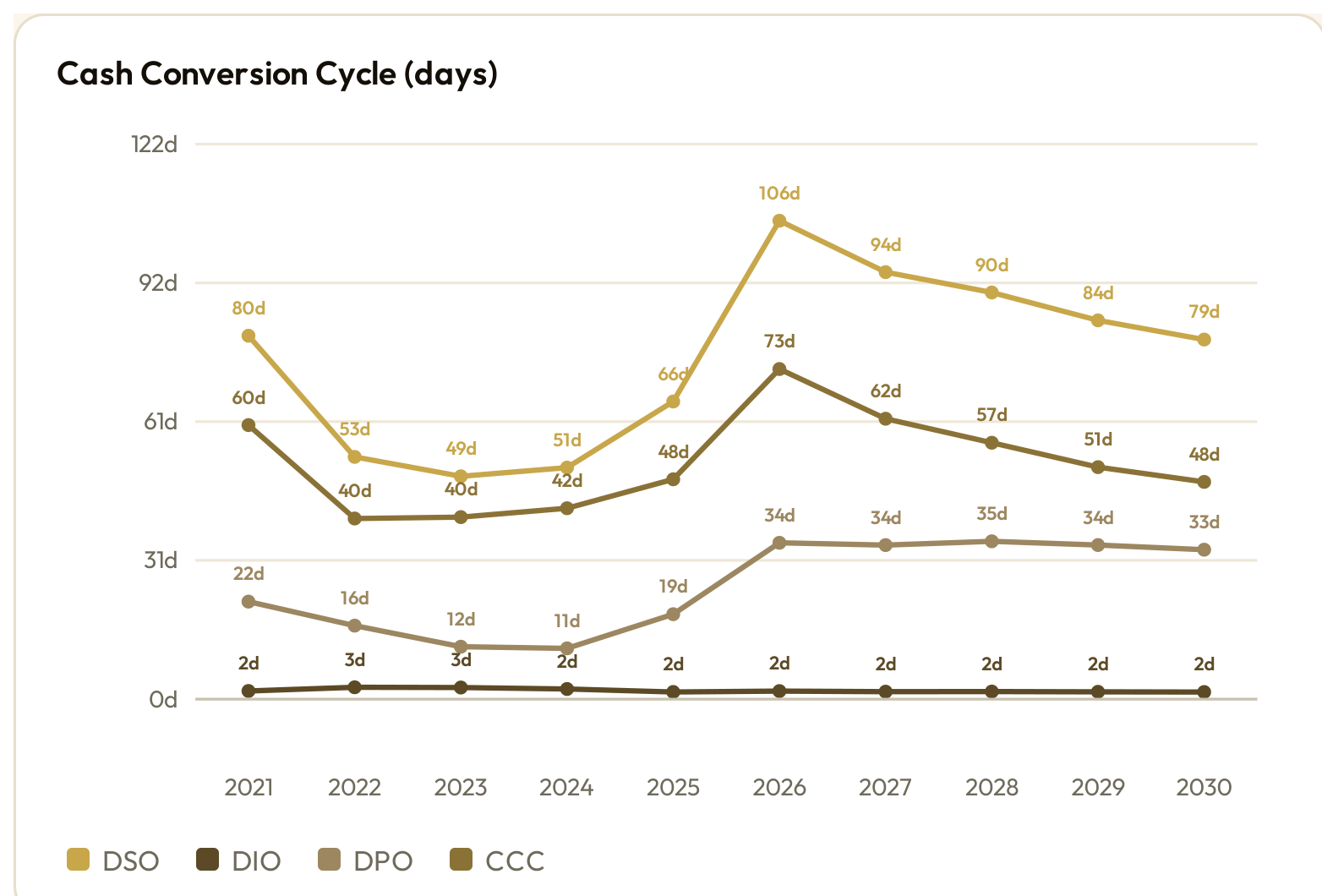
Yes, materially. A 10-day improvement in collections cuts DSO from 106 to 96 days and the cash conversion cycle from 73 to about 63 days.

That releases roughly 29% more ending cash, from 10,274 to about 13,200 to 13,500, and narrows the gap to the 60-day target from 46 to 36 days.

The cash cycle

Days in receivables, inventory and payables.

Days sales outstanding, days inventory outstanding, days payable outstanding and the cash conversion cycle by year
Live in as little as 48 hours

See Financiario with your own numbers.

Share read-only access to your accounting data and your connected financial picture is ready in as little as 48 hours, with no model to build and no system to operate.